IMAGEN HUNTING
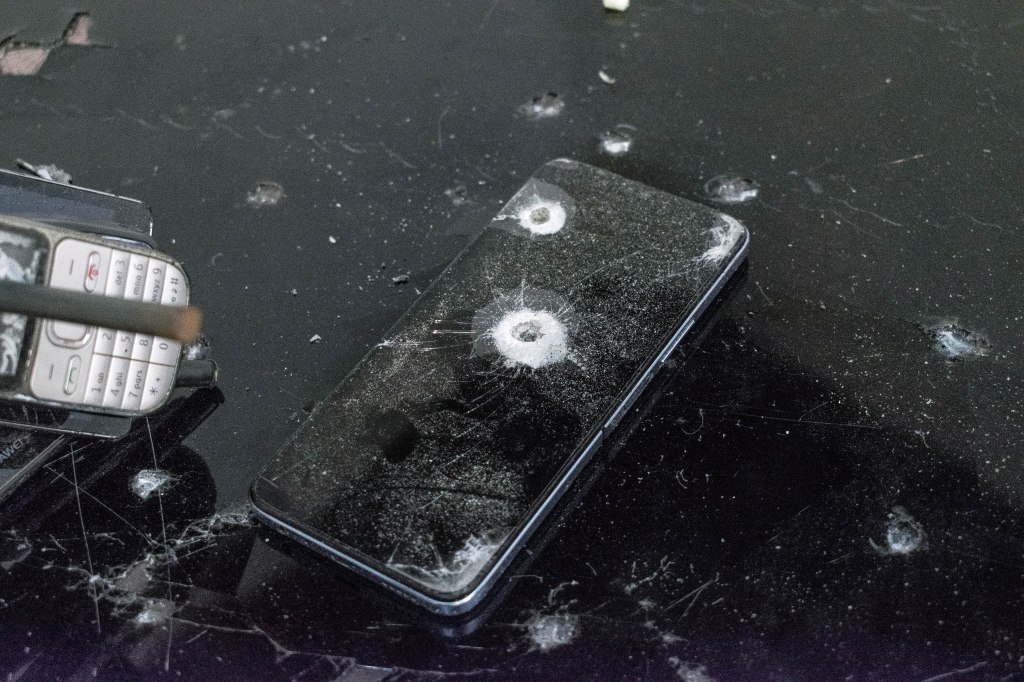
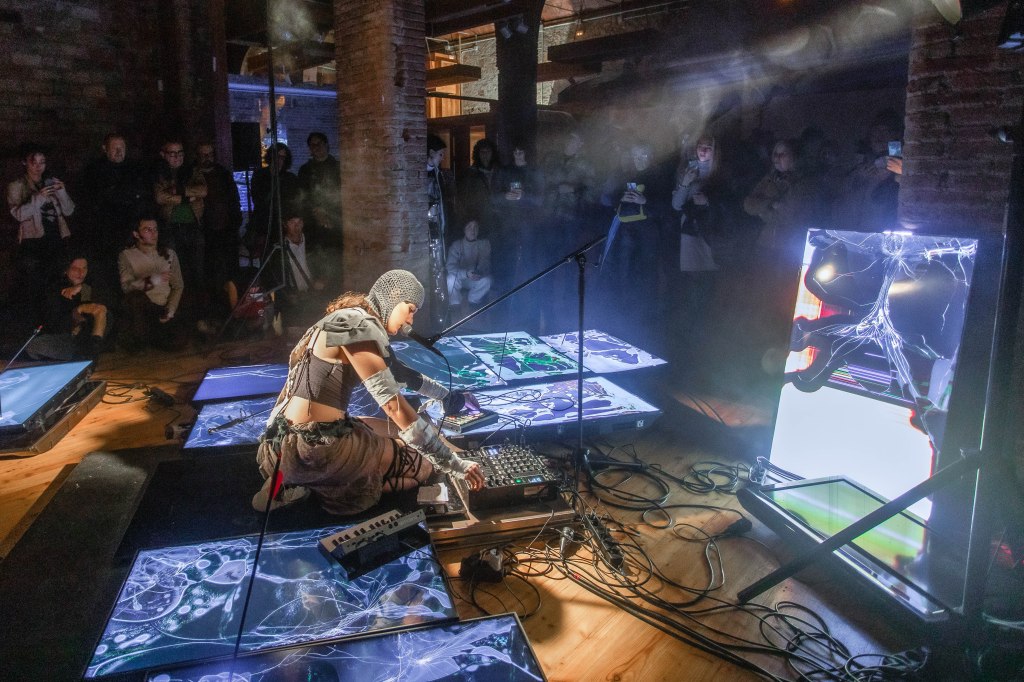
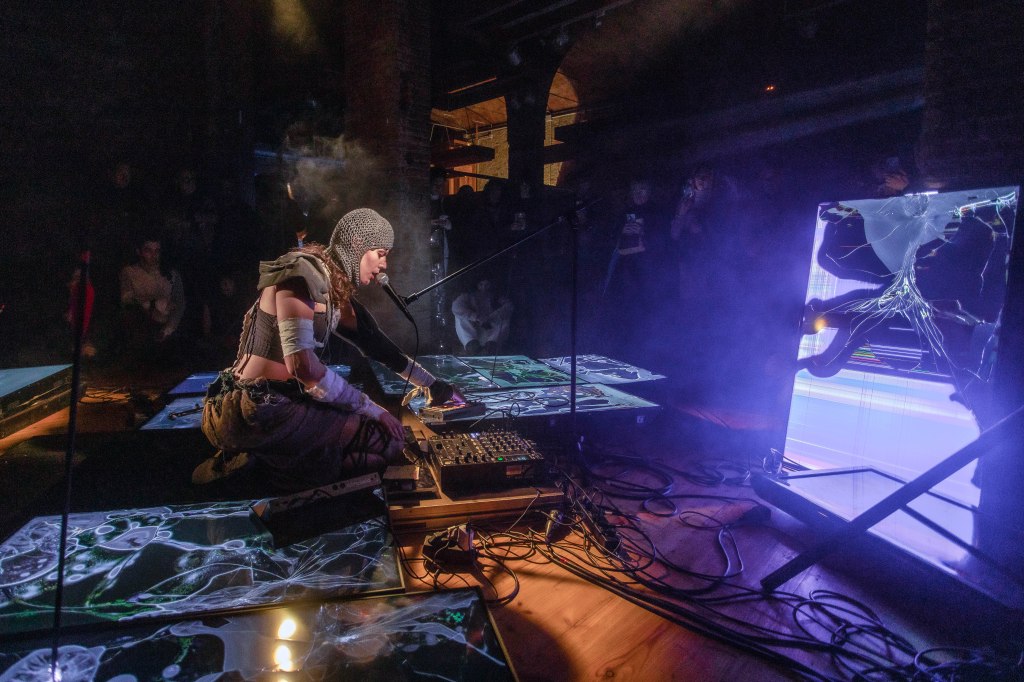
Imagen Hunting does not capture images. It observes them. It pierces them. It transforms them. Here, the image stops being intangible and becomes physical and vulnerable to impact—opened up to reveal its internal structure.
In a world saturated with digital, immaterial images trapped in the logic of hyper-likes, this ritual presents itself as a form of resistance. Screens (of immutable and perfect nature) become bodies to be traversed and intervened upon with a bow, a drill, or a cutting disc. The dichotomy between analog and digital becomes a site of creation, where the machine not only destroys but performs an action, a gesture.
Just like in viral internet videos, where industrial machinery crushes and breaks objects with hypnotic seduction, Imagen Hunting embraces this logic, showing a machine that does not optimize but subverts.
Between play and work, the gesture oscillates. A ritual in which the figure of the hunter is inhabited through the dynamics of the video game (in an analog way) to return a body to the image. Here, the image does not only represent violence. It is pierced by it. It embodies it.
From a LOW-TECH poetics, this practice questions the power dynamics in technological production: accelerated consumption and planned obsolescence. What the industry discards becomes raw material for artistic action and experimentation.
The violence enacted upon the image does not destroy it but displaces it toward a new existence. It transmutes. Like a technological spell, its rupture opens a crack from which the image is reborn, freed from its superficial appearance.
Imagen Hunting no captura imágenes. Las observa. Las atraviesa. Las transforma. Aquí, la imagen deja de ser intangible para volverse física y vulnerable al impacto; abriéndola y revelando su estructura interna.
En un mundo saturado de imágenes digitales, inmateriales y atrapadas en la lógica del hiper-like, este ritual se plantea como una forma de resistencia. Las pantallas (de naturaleza inmutable y perfecta) se convierten aquí en cuerpos atravesables e intervenibles mediante un arco, un taladro o una radial. La dicotomía entre lo analógico y lo digital se convierte en un lugar de creación, donde la máquina no solo destruye, sino que performa una acción, un gesto.
Al igual que en los vídeos masivos de internet, donde maquinaria industrial aplasta y rompe objetos con una seducción hipnótica, Imagen Hunting acoge esa lógica, mostrando una máquina que no optimiza, sino que subvierte.
Entre juego y trabajo, el gesto oscila. Un ritual donde se habita la figura del cazador desde las dinámicas del videojuego (de un modo analógico) para devolverle a la imagen su cuerpo. Aquí la imagen no solo representa la violencia. La atraviesa. La encarna.
Desde las poéticas LOW-TECH, esta práctica cuestiona las dinámicas de poder en la producción tecnológica: el consumo acelerado y la obsolescencia programada. Lo que la industria desecha se convierte aquí en materia prima para la acción y experimentación artística.
La violencia ejercida sobre la imagen no la destruye, sino que la desplaza hacia una nueva existencia. Transmuta. Como un hechizo tecnológico, en su ruptura se abre una grieta desde donde la imagen renace para ser liberada de su apariencia superficial.


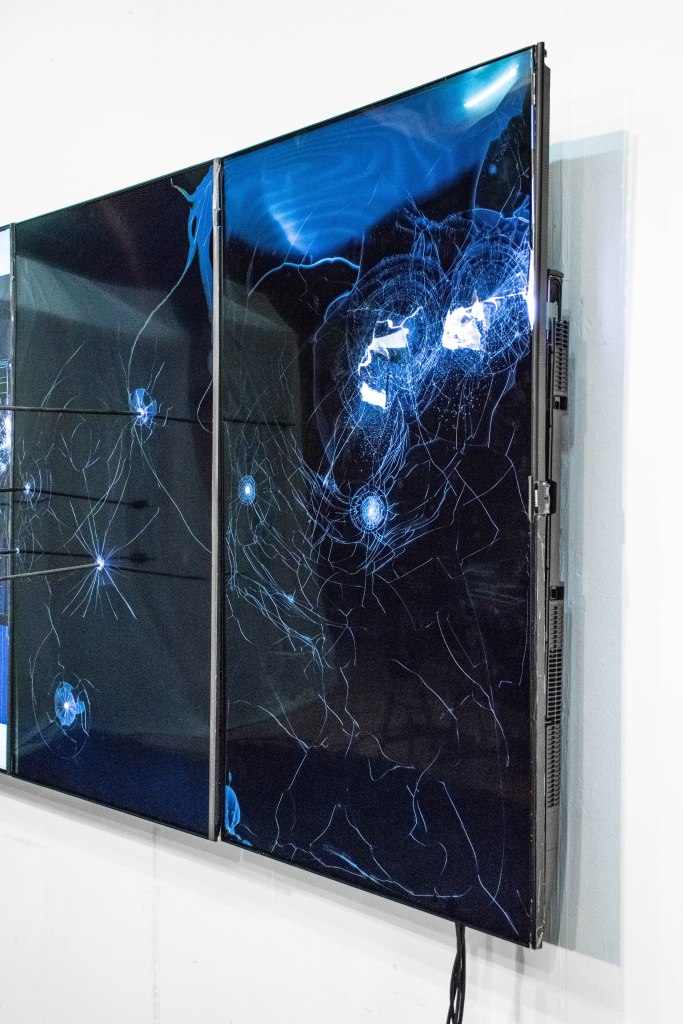
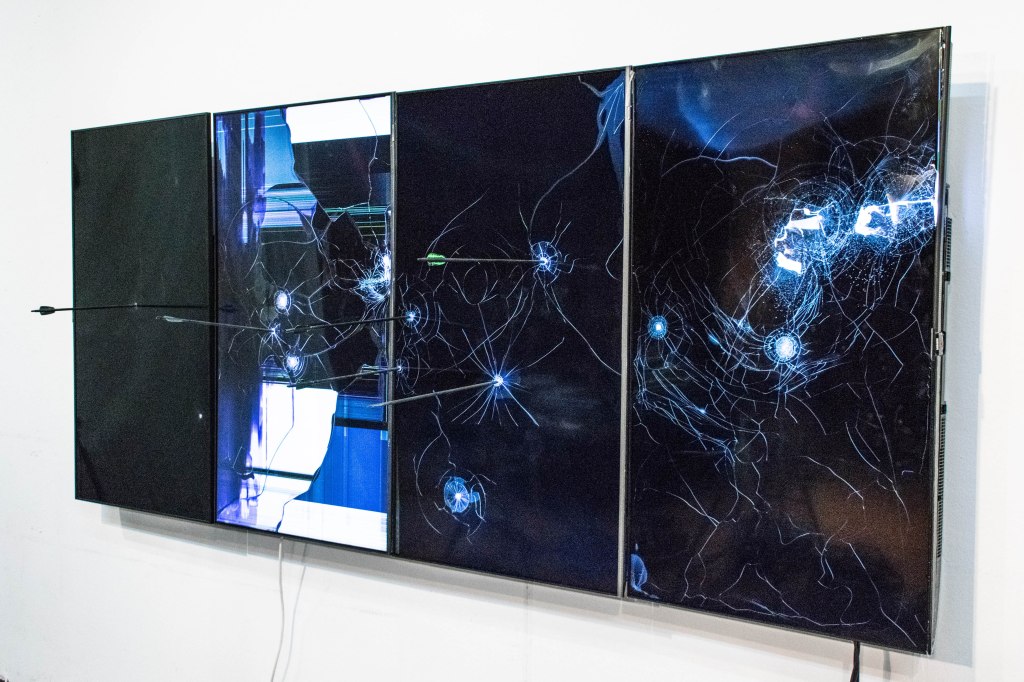


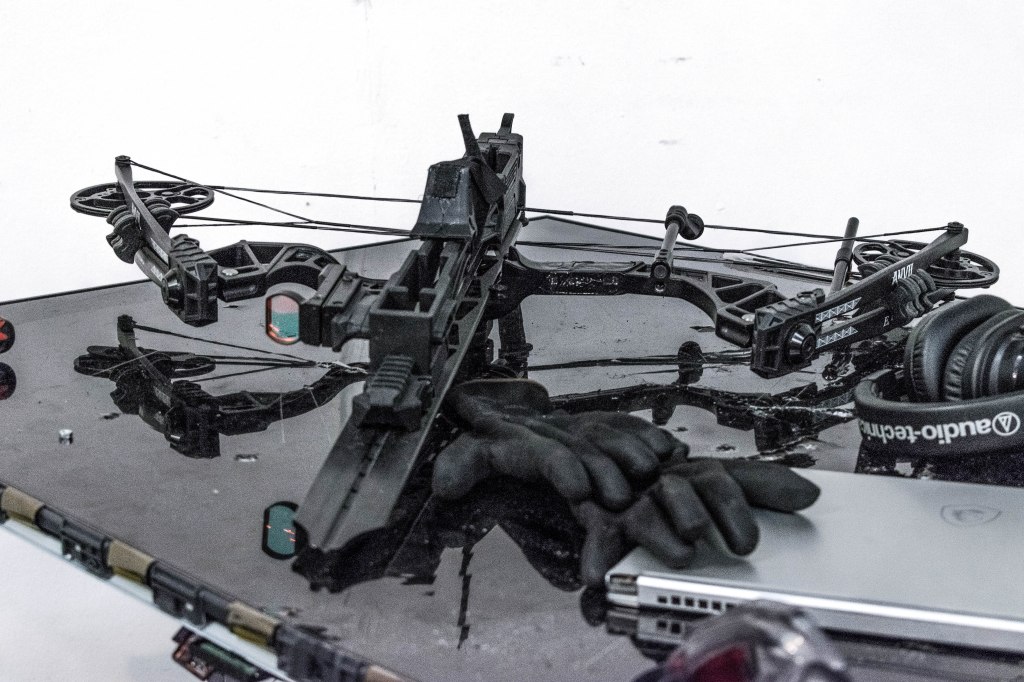

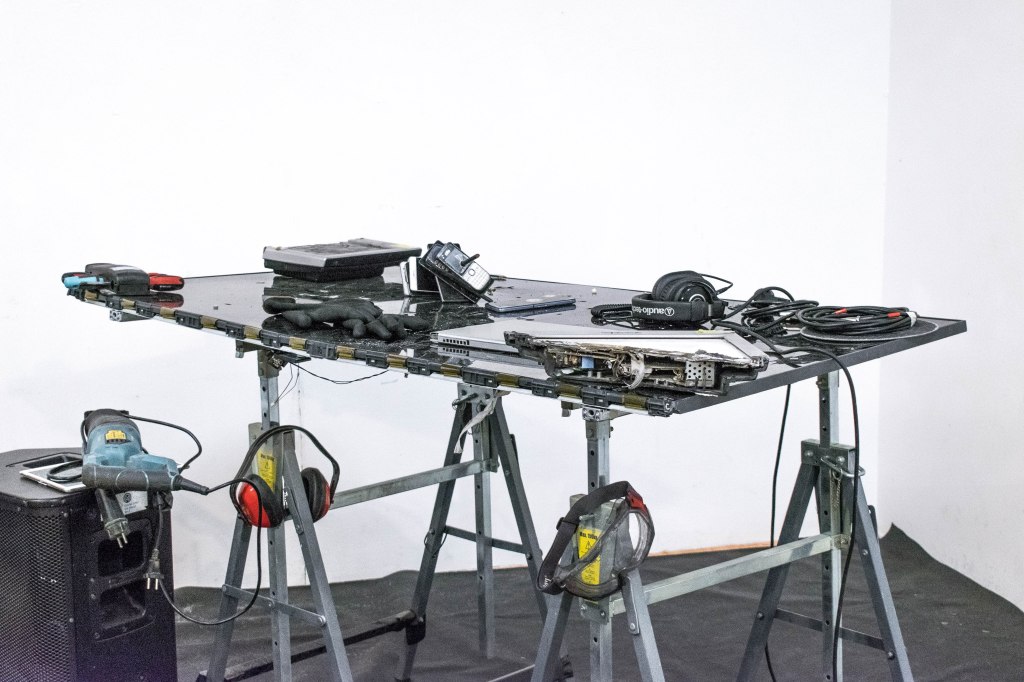


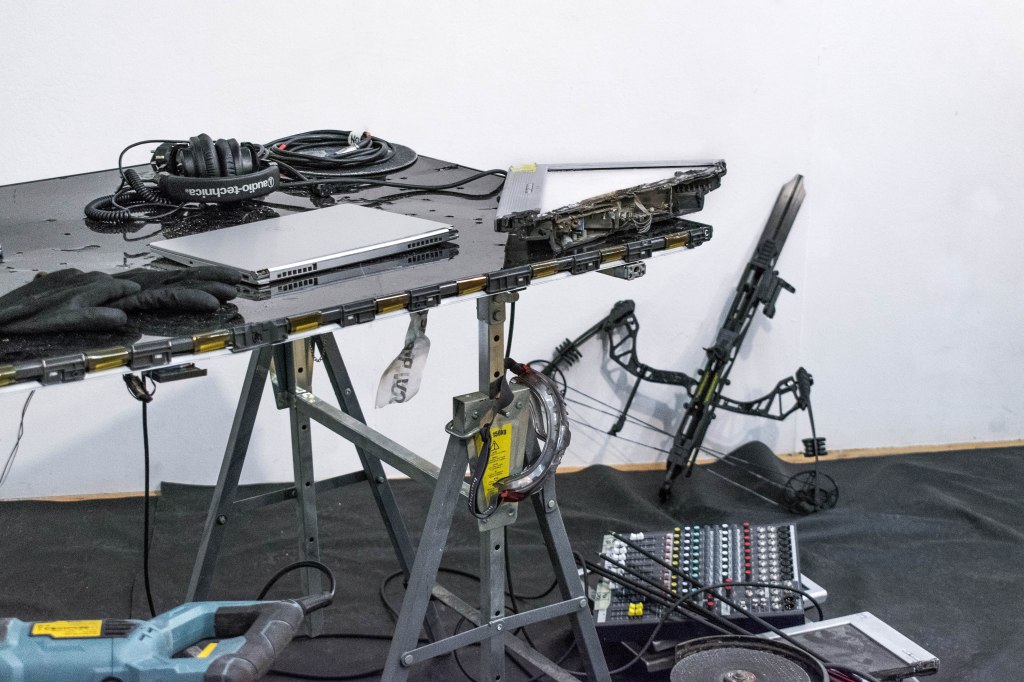

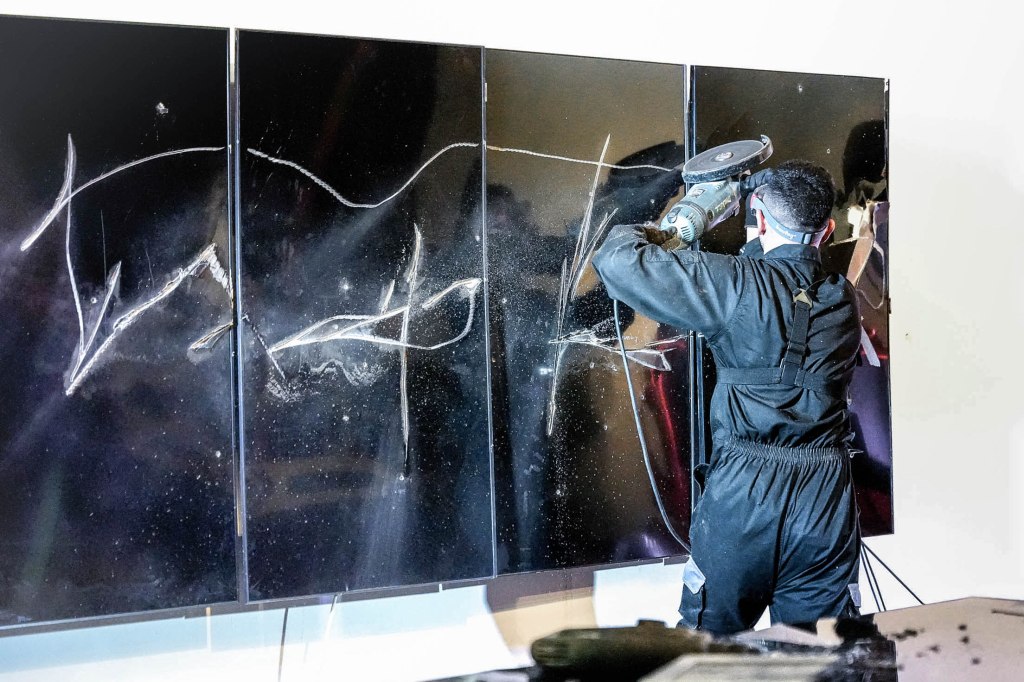


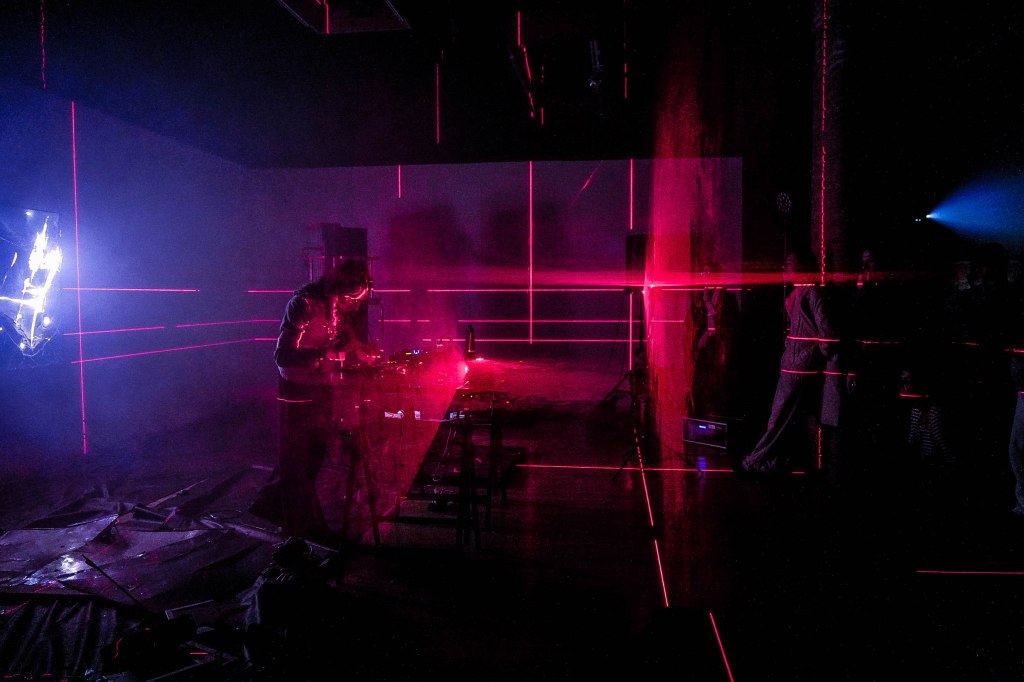
This performative and installative action, in which Leo Pum, together with Kanno on sound, embodies the character of the Hunter, serves as both the opening and scenography for the three-day micro-festival titled LORE, held at Cal Massó art center in Reus, in collaboration with MEDOL Tarragona. The event also features performances by Bella Báguena as the Warrior, Matacandil (Eros Migos + Llum) as the Druids, Polifem as the Witch, and Guillem Sarría as the Final Boss or Devil.
Curated by Leandro Mora and Vicent Fiblá, the project is grounded in the fusion of technology, tradition, nature, magic, and science. Drawing from role-playing games, fantasy novels, and video games, it constructs a world of its own: a lore.
Esta acción performativa e instalativa, en la que Leo Pum, junto a Kanno en el sonido, encarna al personaje del cazador, funciona como introducción y escenografía del pequeño festival de tres días titulado LORE, celebrado en Reus el centro de arte Cal Massó con MEDOL Tarragona. El evento cuenta también con las actuaciones de Bella Báguena representando a las guerrera, Matacandil (Eros Migos + Llum) como los druidas, Polifem como la bruja y Guillem Sarría en el rol del jefe final o diablo.
Este proyecto, comisariado por Vicent Fiblá y Leandro Mora, se fundamenta en la combinación de tecnología, tradición, naturaleza, magia y ciencia. Inspirado en los juegos de rol, las novelas de fantasía y los videojuegos, construye un universo propio: un lore.






Artwork · Leo Pum (@leo.pum)
Text · Helio Carbono
Sound & Music · Kanno (@ka.nno)
Curators · Vicent Fiblá (@vicentfibla), Leandro Mora (@leo.pum)
Graphic Design · Ramón Lechado (@rlechado.png)
Photography & Video · Manel Granell (@manel.r.granell), Ariadna Lucena (@luzzari_), Leandro Mora (@leo.pum)
Technical Direction · Laia Caballero Cano (@_ka.nno)
Styling · Felipe Reynoso (@otr3_s / @felipxreynoso), Beatriz Zirtte (@zirtte)
Places & Dates ·
· 13 February – Sala Amadís, INJUVE – MADRID
· 20–22 February – Cal Massó (@calmasso) x MEDOL (@medol_tgn) – REUS
· 25 February – GE53 Gallery (@ge53galeria) – VALENCIA
Performing Artists ·
Bella Báguena (@xbellaxbaguenax),
Matacandil (Eros Migo + Llum Tourdion),
Polifeme (@polifeme_),
Guillem Sarría (@guillem.srrv)
Special Thanks ·
Natalia Alonso (@natalia_alar),
Pablo Quesada (@quesada__pablo)
 LEO PUM